

Master of Management

The Master of Management (MM) Study Program of the Faculty of Economics at UPN “Veteran” Yogyakarta was officially established in 2001 through the Decree of the Director General of Higher Education, Ministry of National Education No: 3101/D/T/2001 dated September 26, 2001. MM is an advanced study program (S2) at the postgraduate level in the field of management. Initially, postgraduate education was organized by the university. However, over time, since 2015, the organization of postgraduate education has been handed over to the relevant faculty.
The main goal of establishing the MM program is to produce qualified professional manager candidates. As a growing educational program, the MM study program requires hard work and a long preparation period, both in terms of curriculum development and the development of educational facilities that meet Master of Business Administration (MBA) standards and industry needs. The MM curriculum development is based on meetings and discussions with various alumni. Currently, MM UPN “Veteran” Yogyakarta is accredited with a grade of Excellent.
The existence of the MM program study is to equip students with competencies in the field of management. In line with the Vision of UPN “Veteran” Yogyakarta, the Vision of the MM UPN “Veteran” Yogyakarta Study Program is:
"To become the leading, modern, and independent Master of Management Study Program in implementing the Tri Dharma of Higher Education, grounded in Pancasila morality, the spirit of struggle, and a national perspective in support of national development."
The MM Study Program has made various adjustments in concentration specializations. The concentrations offered are Marketing Management, Human Resource Management, and Financial Management. MM introduces new concentrations, namely Operations Management and Strategic Management, to complement the concentrations offered by the specializations. With the introduction of these new concentrations, MM has covered all areas of management functions.
The Master of Management (MM) degree is obtained by completing a total of 45 credits. MM-FE UPNVY maintains relationships with its alumni through constructive interactions to support ongoing learning activities and to build a network. The learning outcomes of this program are professional managers with strong knowledge, leadership, and a willingness to always prioritize ethics in all aspects. These learning outcomes manifest in individual improvements in knowledge enrichment, changes in mindset, and positive actions toward sustainable social and environmental aspects. The goal of the PPS MM is to produce graduates who are capable of analytical, critical, and synthetic thinking and to develop soft skills so that they can compete with other postgraduates.
INFORMATION BULLETIN
Tracer Study of Graduates

Press Release: "Faculty of Economics and Business at UPN “Veteran” Yogyakarta and Ming Chi University of Technology, Taiwan, Strengthen Collaboration for Impactful and Sustainable Community Empowerment"
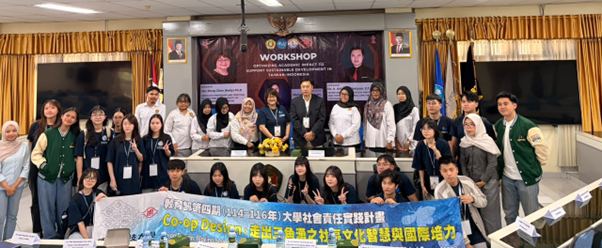
Yogyakarta, October 5, 2026 – The Faculty of Economics and Business (FEB) at Universitas Pembangunan Nasional “Veteran” Yogyakarta welcomed an academic delegation from Ming Chi University of Technology (MCUT), Taiwan. The delegation, comprising two faculty members and 17 students, participated in a workshop on Monday, October 5, 2026, to exchange best practices in community engagement between UPN “Veteran” Yogyakarta and MCUT. The workshop was attended by faculty members and students from six study programs within FEB and explored how higher education institutions can deliver meaningful and sustainable impacts through community empowerment initiatives.
During the workshop, Prof. Jau-Rong (Kelly) Chen, Head of University Social Responsibility at MCUT and Director of the International Master of Business Administration (IMBA) program, delivered a presentation entitled “From Research to Impact: Building Sustainable Academic Collaboration between Taiwan and Indonesia.” She introduced the Sanxia Living Lab, a sustainable collaborative platform connecting faculty members, students, and local partners. The initiative has reached more than 4,351 participants through 120 activities, including 986 international participants and 1,041 community members. This approach is implemented through the PLACE learning model, which stands for Place-based Learning, Local Cultural Immersion, Action-oriented Collaboration, Cross-cultural Communication, and Experiential Reflection. The model connects research, classroom learning, and community-based practice in a continuous improvement cycle informed by feedback from local partners.
Representing UPN “Veteran” Yogyakarta, Dr. Avido Yuliestyan presented a community engagement management model that integrates faculty community service grants with the university's student community service program, known as Kuliah Kerja Nyata (KKN). Faculty grants provide equipment and technical expertise, while multidisciplinary KKN teams contribute time, on-site engagement, and daily assistance. For example, in Wonokromo Village, Wonosobo, an organic waste shredding machine was integrated with composting activities and black soldier fly (BSF) maggot cultivation. The initiative was supported by standard operating procedures (SOPs), training, and the involvement of local operators to ensure that the system would remain operational after the students returned to campus.
Collaborative Community Engagement in Wukirsari Village
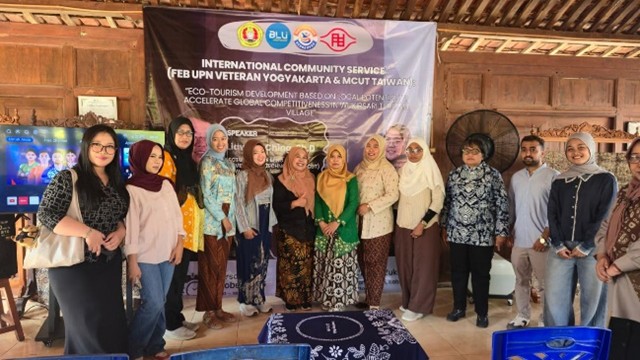
The program continued with a collaborative community engagement initiative in Wukirsari Village, Imogiri, Bantul, on October 8, 2026. The activity was organized by the international team of the Department of Management and involved the MCUT delegation and students from three study programs within FEB.
Wukirsari is one of the villages supported by the Faculty of Economics and Business. During the second semester of the 2025/2026 academic year, the undergraduate Management Study Program also implemented the Merdeka Belajar Kampus Merdeka (MBKM) Village Development Program in the village. Ten students participated in the program, spending one semester learning and engaging directly with the local community. Through this initiative, students could earn academic credits equivalent to 12–20 semester credit units (SKS).
According to the Head of the Department of Management, Dr. Titik Kusmantini, S.E., M.Si., the Village Development Program has generated several valuable outcomes for local partners. These include assistance with digital marketing, the development of an application-based database, and a draft intellectual property publication documenting the batik motifs in the collection of the Giriloyo Hand-Drawn Batik Association.
Safina, Head of the Village Development Program, explained that the database of batik motifs and their philosophical meanings was developed to educate both domestic and international tourists. By simply scanning the barcode attached to each piece of fabric in the association's showroom, visitors can access information about the artisan who created it, its price, production time, and the name and philosophy behind the batik motif.
Asri Sekar Firdaus, S.M., M.Sc., Head of the Undergraduate Management Study Program, added that partner villages provide students with opportunities to identify local potential and challenges while developing solutions in collaboration with community partners.
On the same occasion, Dr. Titik Kusmantini, S.E., M.Si., representing the community engagement team, presented the initiative entitled “Empowering Batik SMEs through Lean Six Sigma at the Giriloyo Hand-Drawn Batik Association, Wukirsari, Bantul.” As the principal investigator of the 2026 Internal Community Service Grant, she handed over personal protective equipment (PPE), including rubber boots, rubber gloves, and rubber aprons, for artisans to use during the pelorodan process, in which wax is removed from dyed batik fabric.
The equipment is intended to improve artisans' occupational safety while supporting a redesigned working environment that is more ergonomic, safer, and conducive to faster production workflows. Another component of the community engagement initiative involved educating artisans on process flow diagrams and the various stages of batik production. The training helps them identify bottlenecks and activities that do not add value, as well as collaboratively develop solutions and follow-up measures to mitigate production-related challenges.
The activities reinforced a central message shared by both speakers: meaningful community empowerment emerges from sustained collaboration, is rooted in local needs, and involves community partners from the outset.
During their visit to Yogyakarta from October 3 to 10, 2026, the MCUT delegation participated in a series of collaborative activities. Prof. Januar Eko Prasetio, S.E., M.Si., Akt., expressed his hope that the two institutions would pursue further collaboration in the future. Potential initiatives include comparative case studies on local development, joint student projects involving participants from both universities, and faculty exchanges to advance collaborative research and teaching.
Press Release: "UPN “Veteran” Yogyakarta Master of Management Program Holds Visiting Lecturer and International Colloquium with Universiti Sultan Zainal Abidin Malaysia"
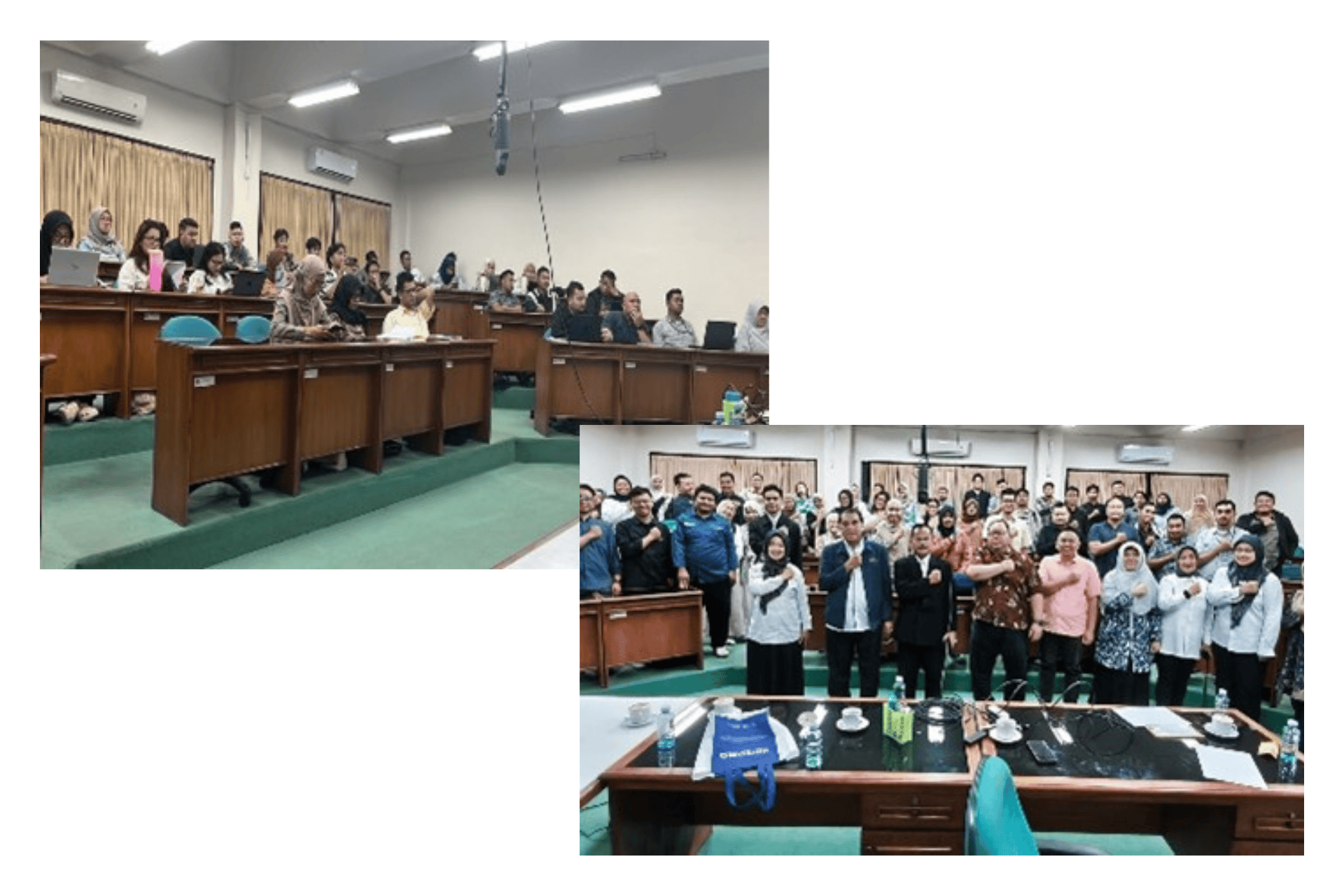
Yogyakarta, 21 September 2026 — Universitas Pembangunan Nasional “Veteran” Yogyakarta (UPNVY) held a Visiting Lecturer & International Colloquium on Monday, 21 September 2026, at Room MM-A, Master of Management Program, UPN “Veteran” Yogyakarta. The event served as an academic platform to strengthen international cooperation, broaden academic perspectives, and encourage the exchange of knowledge and experience between Indonesian and Malaysian academics.
The event featured four speakers from Universiti Sultan Zainal Abidin (UniSZA), Malaysia, who discussed strategic issues in education, leadership, and digital entrepreneurship. The participation of these academics was expected to enrich attendees’ perspectives on evolving practices and challenges across various sectors while opening up opportunities for cross-border academic collaboration.
The first presentation was delivered by Assoc. Prof. Dr. Abdullah Ibrahim, Dean of the Faculty of General Studies and Advanced Education at Universiti Sultan Zainal Abidin, on the topic “Challenges and Opportunities in Educational Management in Malaysia.” The presentation explored the challenges and opportunities in educational management in Malaysia, particularly in responding to the changing educational landscape and the growing demand for improved institutional governance.
Next, Che Amiruddin bin Che Mansor presented “TikTok Shop and Supplementary Income Generation for Digital Entrepreneurs.” The presentation highlighted the development of digital commerce platforms and their potential to create additional income streams for business owners. This topic was particularly relevant to the ongoing digital transformation, which increasingly influences marketing strategies, business development, and the use of social media as a business channel.
The third speaker, Che Mansor bin Salleh, delivered a presentation entitled “The Influence of Leadership and School Climate on Academic Achievement in Rural Secondary Schools.” The presentation examined the importance of leadership and school climate in supporting academic achievement, particularly in secondary schools in rural areas. These perspectives were expected to contribute to further research on educational leadership and the improvement of teaching and learning quality.
Meanwhile, Ali bin Mamat presented “The Influence of Headteacher Transformational Leadership and Learning on Teachers’ Career Development.” The presentation explored the role of headteachers’ transformational leadership and learning in supporting teachers’ career development. The topic offered insights into the importance of leadership that drives change, promotes continuous learning, and supports the professional development of educators.
The organization of the Visiting Lecturer & International Colloquium reflects UPN “Veteran” Yogyakarta’s commitment to strengthening the internationalization of higher education through academic exchanges and the development of collaborative networks with overseas universities. Beyond providing a platform for knowledge sharing, the event was expected to inspire new ideas, broaden research perspectives, and create opportunities for cooperation in education, research, and community service.
Through this event, UPN “Veteran” Yogyakarta and Universiti Sultan Zainal Abidin are expected to continue developing productive and sustainable academic relations. Cross-border collaboration represents a strategic step toward improving the quality of higher education, strengthening human resource capacity, and addressing global challenges through the exchange of knowledge and experience.
UPN “Veteran” Yogyakarta — Widya Mwat Yasa.
Lamemba Field Assessment: Management Study Program and Master of Management Program
