

Master of Accounting


The Master's Program in Accounting is designed with a curriculum that can produce professional accountants, supported by 11 lecturers holding Doctoral degrees with various competency certifications, as well as experienced practitioners.
INFORMATION BULLETIN
Tracer Study of Graduates

Press Release: "Faculty of Economics and Business at UPN “Veteran” Yogyakarta and Ming Chi University of Technology, Taiwan, Strengthen Collaboration for Impactful and Sustainable Community Empowerment"
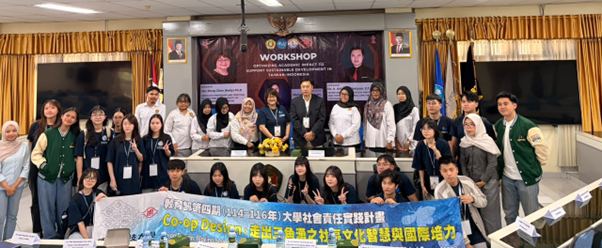
Yogyakarta, October 5, 2026 – The Faculty of Economics and Business (FEB) at Universitas Pembangunan Nasional “Veteran” Yogyakarta welcomed an academic delegation from Ming Chi University of Technology (MCUT), Taiwan. The delegation, comprising two faculty members and 17 students, participated in a workshop on Monday, October 5, 2026, to exchange best practices in community engagement between UPN “Veteran” Yogyakarta and MCUT. The workshop was attended by faculty members and students from six study programs within FEB and explored how higher education institutions can deliver meaningful and sustainable impacts through community empowerment initiatives.
During the workshop, Prof. Jau-Rong (Kelly) Chen, Head of University Social Responsibility at MCUT and Director of the International Master of Business Administration (IMBA) program, delivered a presentation entitled “From Research to Impact: Building Sustainable Academic Collaboration between Taiwan and Indonesia.” She introduced the Sanxia Living Lab, a sustainable collaborative platform connecting faculty members, students, and local partners. The initiative has reached more than 4,351 participants through 120 activities, including 986 international participants and 1,041 community members. This approach is implemented through the PLACE learning model, which stands for Place-based Learning, Local Cultural Immersion, Action-oriented Collaboration, Cross-cultural Communication, and Experiential Reflection. The model connects research, classroom learning, and community-based practice in a continuous improvement cycle informed by feedback from local partners.
Representing UPN “Veteran” Yogyakarta, Dr. Avido Yuliestyan presented a community engagement management model that integrates faculty community service grants with the university's student community service program, known as Kuliah Kerja Nyata (KKN). Faculty grants provide equipment and technical expertise, while multidisciplinary KKN teams contribute time, on-site engagement, and daily assistance. For example, in Wonokromo Village, Wonosobo, an organic waste shredding machine was integrated with composting activities and black soldier fly (BSF) maggot cultivation. The initiative was supported by standard operating procedures (SOPs), training, and the involvement of local operators to ensure that the system would remain operational after the students returned to campus.
Collaborative Community Engagement in Wukirsari Village
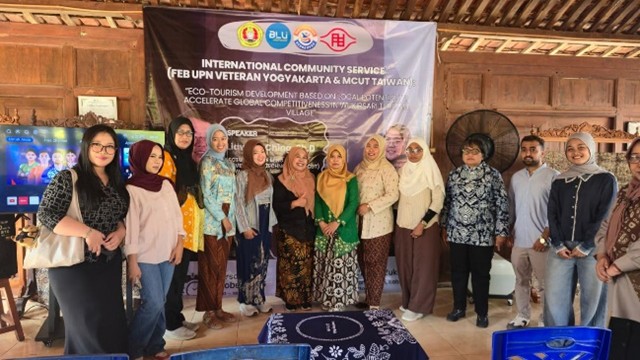
The program continued with a collaborative community engagement initiative in Wukirsari Village, Imogiri, Bantul, on October 8, 2026. The activity was organized by the international team of the Department of Management and involved the MCUT delegation and students from three study programs within FEB.
Wukirsari is one of the villages supported by the Faculty of Economics and Business. During the second semester of the 2025/2026 academic year, the undergraduate Management Study Program also implemented the Merdeka Belajar Kampus Merdeka (MBKM) Village Development Program in the village. Ten students participated in the program, spending one semester learning and engaging directly with the local community. Through this initiative, students could earn academic credits equivalent to 12–20 semester credit units (SKS).
According to the Head of the Department of Management, Dr. Titik Kusmantini, S.E., M.Si., the Village Development Program has generated several valuable outcomes for local partners. These include assistance with digital marketing, the development of an application-based database, and a draft intellectual property publication documenting the batik motifs in the collection of the Giriloyo Hand-Drawn Batik Association.
Safina, Head of the Village Development Program, explained that the database of batik motifs and their philosophical meanings was developed to educate both domestic and international tourists. By simply scanning the barcode attached to each piece of fabric in the association's showroom, visitors can access information about the artisan who created it, its price, production time, and the name and philosophy behind the batik motif.
Asri Sekar Firdaus, S.M., M.Sc., Head of the Undergraduate Management Study Program, added that partner villages provide students with opportunities to identify local potential and challenges while developing solutions in collaboration with community partners.
On the same occasion, Dr. Titik Kusmantini, S.E., M.Si., representing the community engagement team, presented the initiative entitled “Empowering Batik SMEs through Lean Six Sigma at the Giriloyo Hand-Drawn Batik Association, Wukirsari, Bantul.” As the principal investigator of the 2026 Internal Community Service Grant, she handed over personal protective equipment (PPE), including rubber boots, rubber gloves, and rubber aprons, for artisans to use during the pelorodan process, in which wax is removed from dyed batik fabric.
The equipment is intended to improve artisans' occupational safety while supporting a redesigned working environment that is more ergonomic, safer, and conducive to faster production workflows. Another component of the community engagement initiative involved educating artisans on process flow diagrams and the various stages of batik production. The training helps them identify bottlenecks and activities that do not add value, as well as collaboratively develop solutions and follow-up measures to mitigate production-related challenges.
The activities reinforced a central message shared by both speakers: meaningful community empowerment emerges from sustained collaboration, is rooted in local needs, and involves community partners from the outset.
During their visit to Yogyakarta from October 3 to 10, 2026, the MCUT delegation participated in a series of collaborative activities. Prof. Januar Eko Prasetio, S.E., M.Si., Akt., expressed his hope that the two institutions would pursue further collaboration in the future. Potential initiatives include comparative case studies on local development, joint student projects involving participants from both universities, and faculty exchanges to advance collaborative research and teaching.
Press Release: "Master of Accounting Program at UPN 'Veteran' Yogyakarta Invites Participants to Learn Farming at Kebonrejo Tourism Village as an Act of National Defense through Food Security"
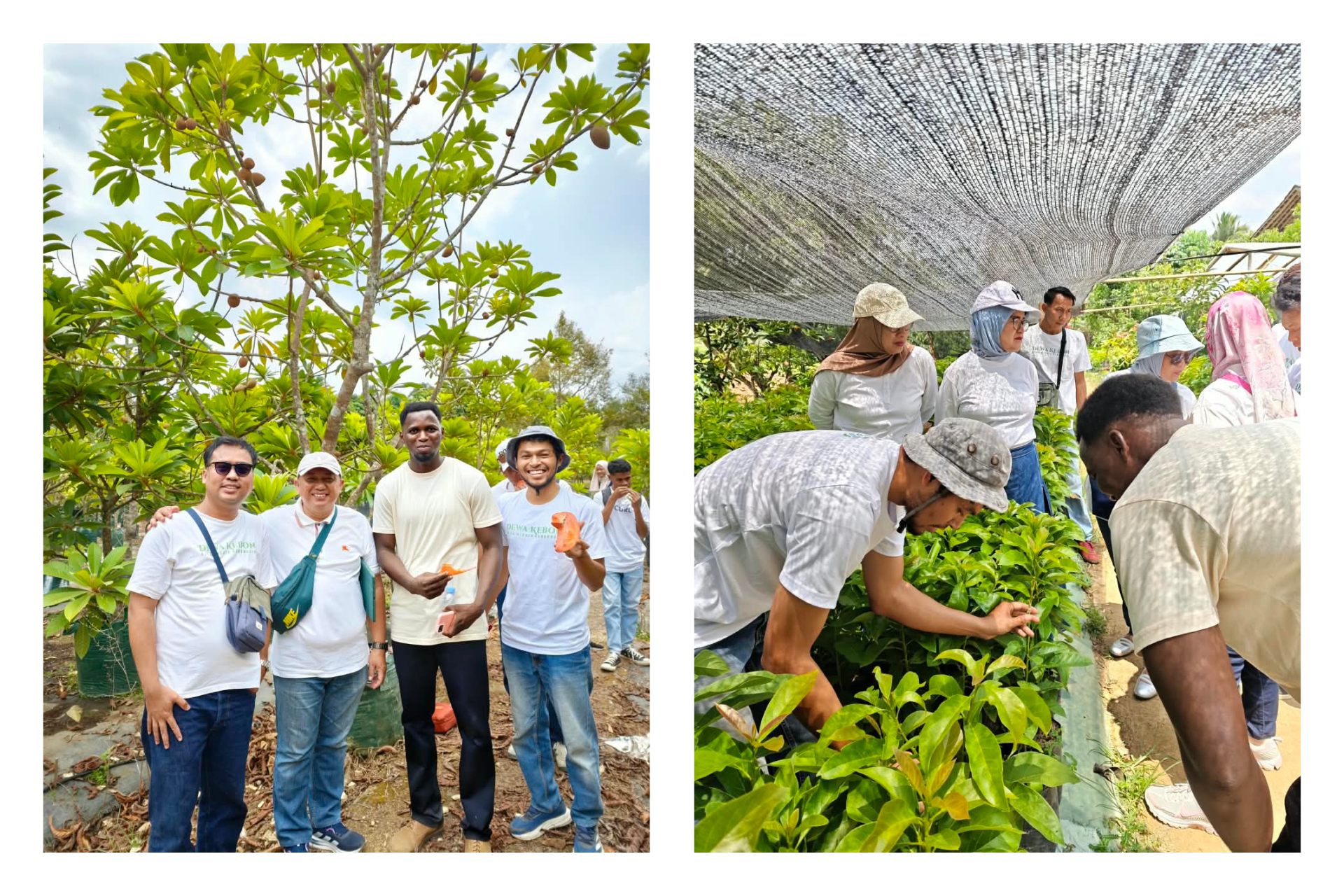
MAGELANG, October 10, 2026. First-semester students of the Master of Accounting Program at the Faculty of Economics and Business, UPN “Veteran” Yogyakarta, organized an educational visit entitled Green Investment for National Resilience: Agricultural Education as an Expression of National Defense through Food Security at Kebonrejo Tourism Village (Dewa Kebon), Salaman District, Magelang Regency, Central Java, on Saturday, October 10, 2026. The students learned about superior fruit cultivation, plant propagation, organic fertilizers, and agricultural product processing as part of efforts to strengthen national resilience through the food sector.
Kebonrejo Tourism Village develops tourism centered on education, agriculture, and culture amid the green hills of Salaman District. The village is widely recognized as a center for propagating high-quality fruit plants, including durian, avocado, and various rare fruit varieties. The residents of Kebonrejo also preserve local cultural traditions, including the traditional Topeng Ireng dance. The village's management team promotes its agritourism initiative under the motto Kebonrejo Agritourism: Cultivate, Learn, Inspire.
The first session focused on avocado top-grafting techniques and took place from 9:55 to 10:20 a.m. Western Indonesia Time (WIB). The instructor introduced three plant propagation techniques. Top grafting involves joining the shoot of a superior plant, known as the scion, to a cut rootstock. In side grafting, the rootstock is not completely cut off at the beginning of the process. Meanwhile, approach grafting involves joining two plants that each retain their own root systems. The students subsequently practiced producing seedlings at the nursery, which cultivates superior durian and avocado varieties.
The next session covered the production of liquid organic fertilizer. The instructor demonstrated how household organic waste can be processed into useful products, including natural fertilizer, floor cleaner, and water purifier. The session also covered the production of eco-enzyme, a multipurpose liquid produced by fermenting fruit peels and vegetable scraps. These activities promote environmental conservation while helping reduce organic waste.
The students then visited a 1.5-hectare orchard featuring rare and exotic fruit varieties. The orchard cultivates plants originating from Central America and Mexico, including mamey sapote, also known locally as sawo jumbo, including the Lorito variety, and black sapote, as well as abiu, a fruit native to Australia. The instructor explained fruit tree cultivation and maintenance, covering everything from growing medium management and proper fertilization to pruning techniques.
The students subsequently visited a 1.5-hectare superior durian orchard to observe the intensive cultivation of premium durian varieties, including Musang King and Durian Hitam. Dewa Kebon also cultivates other premium fruit varieties, including Miki avocado, Kateki longan, Ochee durian, and MK Hortimart durian.
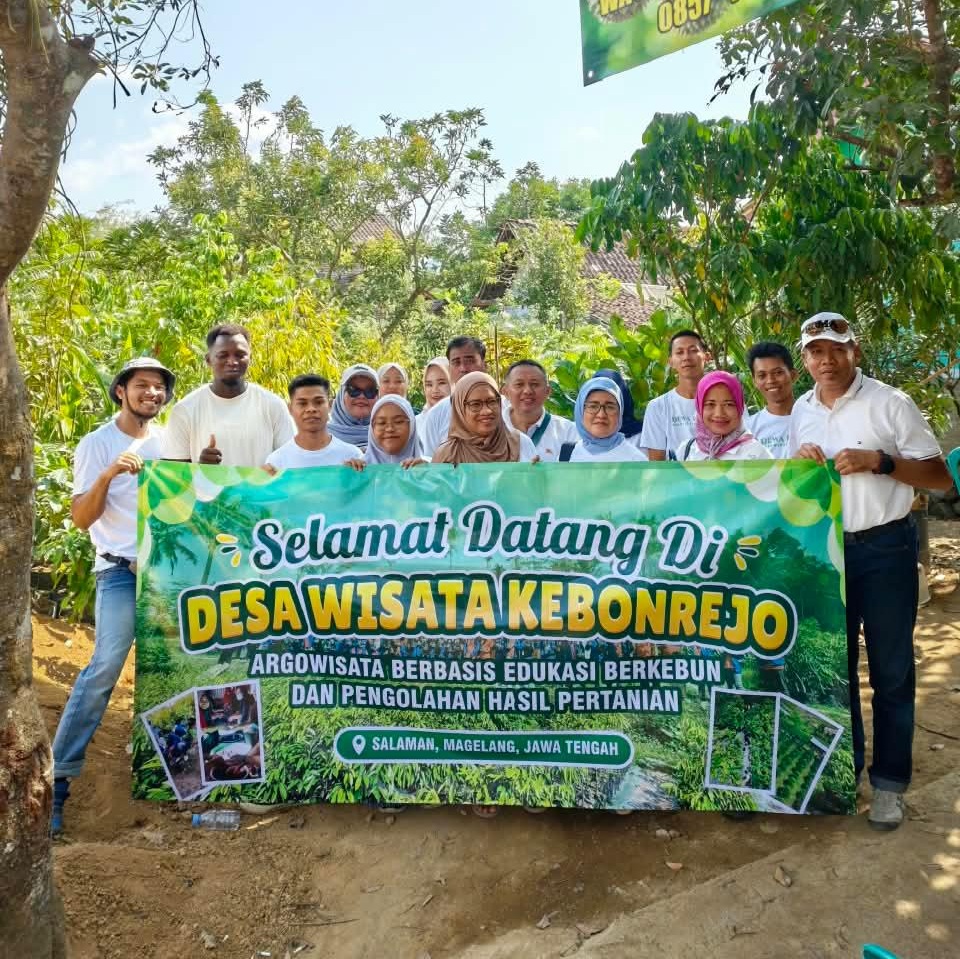
At the end of the visit, the students toured the production facility of Grubi, a micro, small, and medium enterprise (MSME). They learned about the production process and business management involved in processing sweet potatoes and cassava into traditional food products. Grubi is a crunchy snack made from sweet potatoes shaped into small balls and coated with caramelized palm sugar. Getuk is made from boiled and mashed cassava, has a sweet and savory flavor, and is commonly served with grated coconut. Templek is a savory cassava-based snack seasoned with spices and fried until crispy.
Agriculture and National Defense through Food Security
Through this initiative, the Faculty of Economics and Business at UPN “Veteran” Yogyakarta positions agriculture as a form of green investment that contributes to national resilience. For Master of Accounting students, the visit to Kebonrejo provided firsthand insights into the agricultural value chain, from plant propagation and organic waste management to product processing and the marketing of MSME products. This knowledge equips students to evaluate green investment opportunities while contributing to the strengthening of Indonesia's food self-sufficiency.
Supporting rural MSMEs and preserving local cultural heritage also represent tangible expressions of national defense beyond the realm of military defense.
Those interested in learning more about Kebonrejo Tourism Village may contact the management team at 0821 3671 0580 or visit its Instagram account, @dewakebon.
Thesis Proposal Seminar: "14th of November 2025"

Press Release: “National First-Place Award for Master of Accounting Student”

Magelang – Muhamad Burhanudin, a young man from Salaman District, Magelang, and a Master of Accounting student at UPN "Veteran" Yogyakarta, has once again made a remarkable achievement at the national level. He won First Place in the National Young Pioneer Village Program in the Field of Digital Economy from the Ministry of Youth and Sports (Kemenpora) of the Republic of Indonesia, after previously winning at the Provincial Level in Central Java.
The award was presented directly by the Regent of Magelang, Grengseng Pamuji, following the 97th Youth Pledge Day commemoration ceremony at the Magelang Regency Secretariat courtyard on Tuesday (October 28).
Burhan, as he is affectionately called, explained that he earned this award through his initiative in developing a website-based digital platform called mastanibibit.com, which serves as a marketplace for farmers’ products, particularly plant seeds.
“I initiated a website-based digital application called mastanibibit.com, a platform for farmers’ products, especially plant seeds,” Burhan said after receiving the award from the Regent of Magelang.
In addition to Burhan, the Regent of Magelang also presented awards to five Subdistrict Verification Volunteers as part of the Award Program for Outstanding Youths. They were Annisa Nabila Safitri, Bayu Putra Kurniawan, Arief Budianto, Fajar Kurniawan, and Nurul Layladduja.
Opinion: Strengthening SOE Governance Amid a Trust Crisis
Indonesia is a country rich in natural resources, including the mining sector, which serves as one of the backbones of the national economy. Its contribution to increasing state revenue, job creation, and exports is undeniable. However, these contributions have not fully translated into benefits for the wider society. Instead of bringing prosperity, weak and unaccountable governance (good corporate governance) has opened the door to environmental degradation due to excessive exploitation, economic inequality, and social conflict.
In recent years, the government has continued to promote downstream processing and value-added efforts in the mining sector. However, downstream efforts without comprehensive governance reform that emphasizes sustainability, transparency, and fairness will merely become an extension of old exploitative patterns in a new form.
Many problems stem from weak oversight and overlapping regulations. The prevalence of illegal mining, the granting of permits without thorough environmental impact assessments (AMDAL), and the lack of community involvement in decision-making processes all reflect poor governance. Often, mining companies neglect their obligations to carry out reclamation, directly endangering the safety and health of surrounding communities.
Moreover, production and financial reporting systems that lack full transparency create opportunities for data manipulation and potential corruption. In several regions, conflicts between local communities and mining companies also highlight the state’s failure to ensure fair benefit distribution.
Therefore, strengthening oversight systems, enhancing the capacity of audit committees, and establishing independent compliance units must be integral parts of governance transformation. Equally important is fostering a culture of integrity throughout the organization so that GCG becomes more than just a slogan—it becomes a living system embedded in corporate daily practices.
The recent cases that have surfaced should serve as a collective reflection—not for finger-pointing, but as a starting point for continuous improvement. Indonesia has a great opportunity to build strong, clean, and credible state-owned enterprises in the eyes of the world, provided that good governance is not merely formal but applied consistently and thoroughly.
Opinion by: Siti Nur Maryanti, Master's Student at UPN "Veteran" Yogyakarta